
Allow 1.5 hrs for this walk.
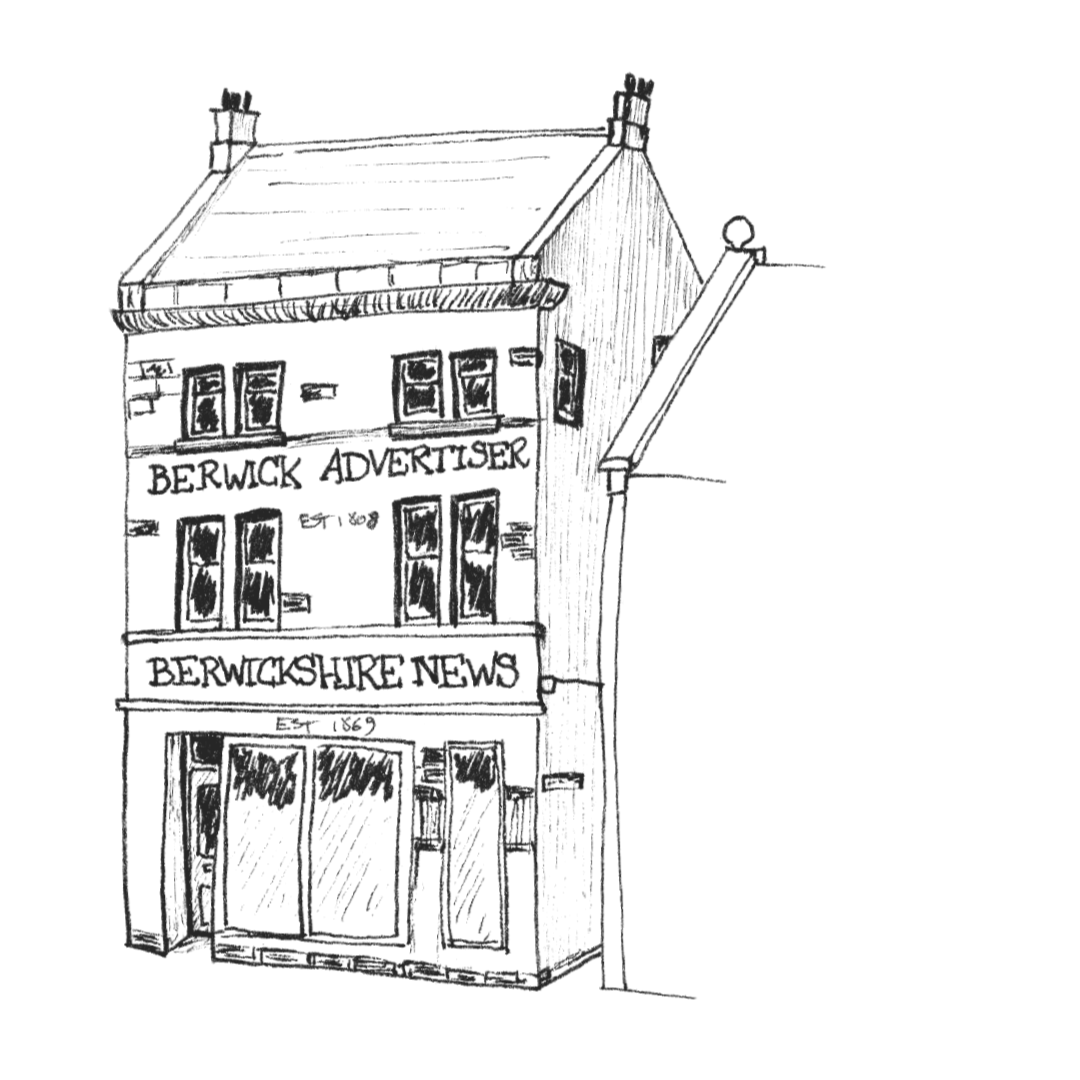
The Berwick Advertiser Offices - "Who Was Wilson?"
Click below to listen to audio commentary (audio narration by Andrew Ayre)
John Mackay Wilson was born in 1804 in Tweedmouth, the son of William and Jane Wilson, Scotsmen from Duns but living in Tweedmouth at the time of his birth. Wilson's father was one of 23, so lots of aunts, uncles and cousins with Tales to tell!
At the time of Wilson’s birth, the Napoleonic Wars were being waged with France, whilst Britain’s Empire was set to grow rapidly on the back of her unrivalled seapower. Berwick-upon-Tweed itself was still a busy port, with visiting sailors from around the world. The international yarns they brought with them, as well as traditional Border ballads and stories of the Jacobite uprisings and the religious persecution of the Covenanters, would have filled Wilson’s formative years.
He was involved with books from an early age; his first job at age 11 was as a printer with William Lochhead based in the centre of the town. By the time he was 15 he had published his first work, a poem called “A Glance at Hinduism”.
After being jilted by Sarah Sanderson of Gainslawhill, he decided to move on and try his luck elsewhere, first in London without much success, then in Edinburgh and Manchester, before returning to Berwick to take up the post of Editor of the Berwick Advertiser in 1832.
What were the Tales?
When short of news, he would fill the space in the paper with his own poems and short stories. These were well received and in 1834 he started publishing separate weekly editions of ‘Wilson’s Tales of the Borders, and of Scotland’. Subtitled Historical, Traditionary and Imaginative, they covered a wide range of local tales. He started with 2,000 copies a week but, within a year, success meant reprints and expanding the print run to 30,000 copies
Sadly Wilson died in 1835 at the age of just 31 but the Tales continued to be published for another six years, with many contributors and gradually including stories from across Scotland and then around the world. There were eventually 312 editions, containing 474 tales, which were seldom out of print for the next 150 years.
The current Berwick Advertiser Office (on Marygate) was built after Wilson’s death. He would have worked in the previous office in West Street.
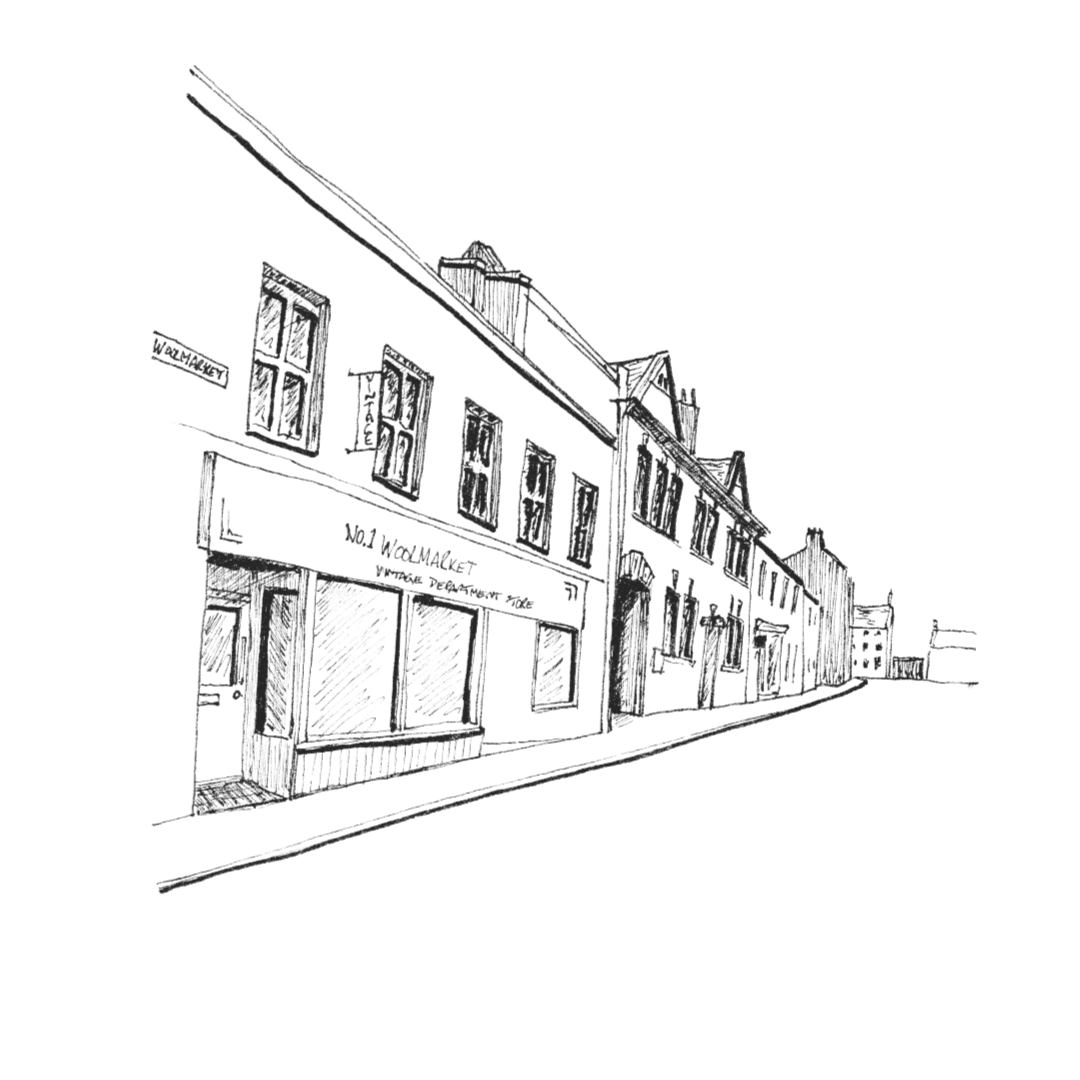
Woolmarket - The Red Hall
Click below to listen to audio commentary (audio narration by Jane Houston Green)
In 1296, Berwick-upon-Tweed was an important Scottish town, contributing significantly to Royal coffers. Flemish merchants were given preferential trading rights in return for their support in defending the town.
Edward I was on the war path after the Scottish King, John Balliol, decided to ally himself with France and break his allegiance to the English crown.
The Flemish were based at the Red Hall and — according to Wilson’s version of events — were enjoying the wedding of Isabella Fleming to Francis Scott when the English fleet was seen rounding Lindisfarne.
The festivities were abandoned and the Flemish traders led a brave defence of the town until their Hall was burnt down around them. Whilst ‘mild mothers and gentle maidens defended their thresholds’, the English slaughtered at will and the Tweed was said to have run red with blood. Contemporary reports talked of up to 15,000 put to death by sword and flame in a day and a half of fighting.
The Red Hall was thought to be located in Woolmarket. Perhaps called 'Red' because of the use of red roof tiles, brought in as ballast on ships from the Low Countries.

Round Lindisfarne (Morag Eaton)

Mild Mothers (Morag Eaton)
The two prints above entitled ‘Round Lindisfarne’ and ‘Mild Mothers’, were created by local artist, Morag Eaton, as part of a series illustrating the tale of ‘The Red Hall’ for a project run by the Wilson’s Tales Project.
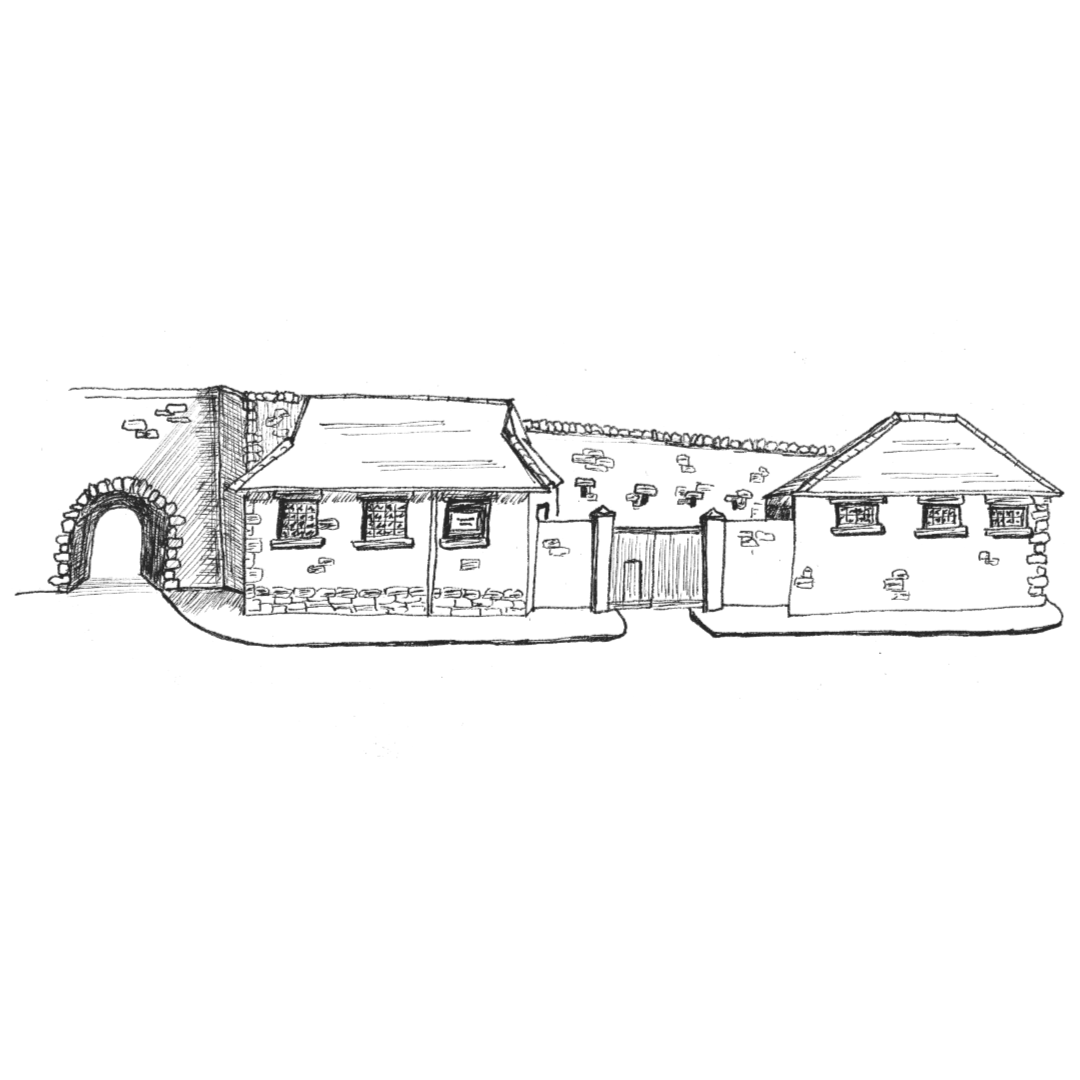
The Straw Yard and the J M Wilson studio
Click below to listen to audio commentary (audio narration by Andrew Ayre)
In addition to writing stories and poems, Wilson was also a playwright. We know of four plays he wrote, some of which were performed to much critical acclaim in Edinburgh.
Unfortunately only one of them, The Siege, seems to have survived. It was published as part of the Wilson’s Tales of the Borders as a “dramatic tale” — the only play within the whole works (See 9). The others were The Rose of Anjou, The Gowrie Conspiracy and The Highland Widow. The Gowrie Conspiracy was a botched attempt to assassinate, or at least kidnap, James V of Scotland in 1600. It is less clear what the storyline of the other two plays would have been.
The Wilson’s Tales Project have commissioned many of the Tales to be re-written in short play format. One of the first was The Monomaniac, an early exploration of post-traumatic stress set in the context of a young wife whose boat is hijacked on passage to India and her husband killed. This was first performed at Paxton House in 2014. The Project now supports an award for a new presentation of a Wilson’s Tale at Duns Playfest.
Nowadays, the Straw Yard is occupied by a local theatre company, Tortive Theatre Co. and their rehearsal and performance space has been named The J M Wilson Studio in honour of Wilson and his legacy."
Coxon's Tower - The Adventures of Lancelot Errington and his Nephew Mark: A tale of Lindisfarne.
Click below to listen to audio commentary (audio narration by Kevin Archer)
This tale is set in 1715, when a Jacobite rising attempted to put the exiled James Stuart (known as the Old Pretender) back on the throne of Great Britain.
The Erringtons, loyal supporters of the Stuarts, succeeded in hoodwinking the garrison and capturing Lindisfarne Castle, only abandoning it when the promised French support failed to materialise.
The Northumbrian rising collapsed. The Erringtons escaped to the seaward side of the Castle and hid under some seaweed but had to reveal themselves as the tide rose, when they were arrested and placed in Berwick jail. From here they managed to escape, stole the harbourmaster’s boat and rowed across the Tweed to Spittal. They then dressed as a pair of fisherwomen to escape - with a brief stop in Bamburgh to say goodbye to Mark’s girlfriend - before making it to safety abroad.
It all sounds a shaggy dog story but is essentially true. The Earl of Derwentwater who owned estates south of Berwick also supported the Jacobites. He had his estates confiscated and given to Greenwich Hospital Estates which own them to this day.
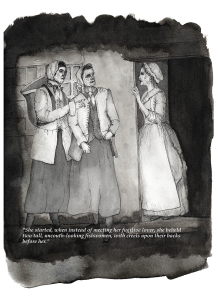
Disguise, from Laucelot Errington (Ali Edwards)
The above Illustration ‘Disguised’ was created by Ali Edwards as part of a series of original pen and ink pieces inspired by some of Wilson’s Berwick-based Tales.
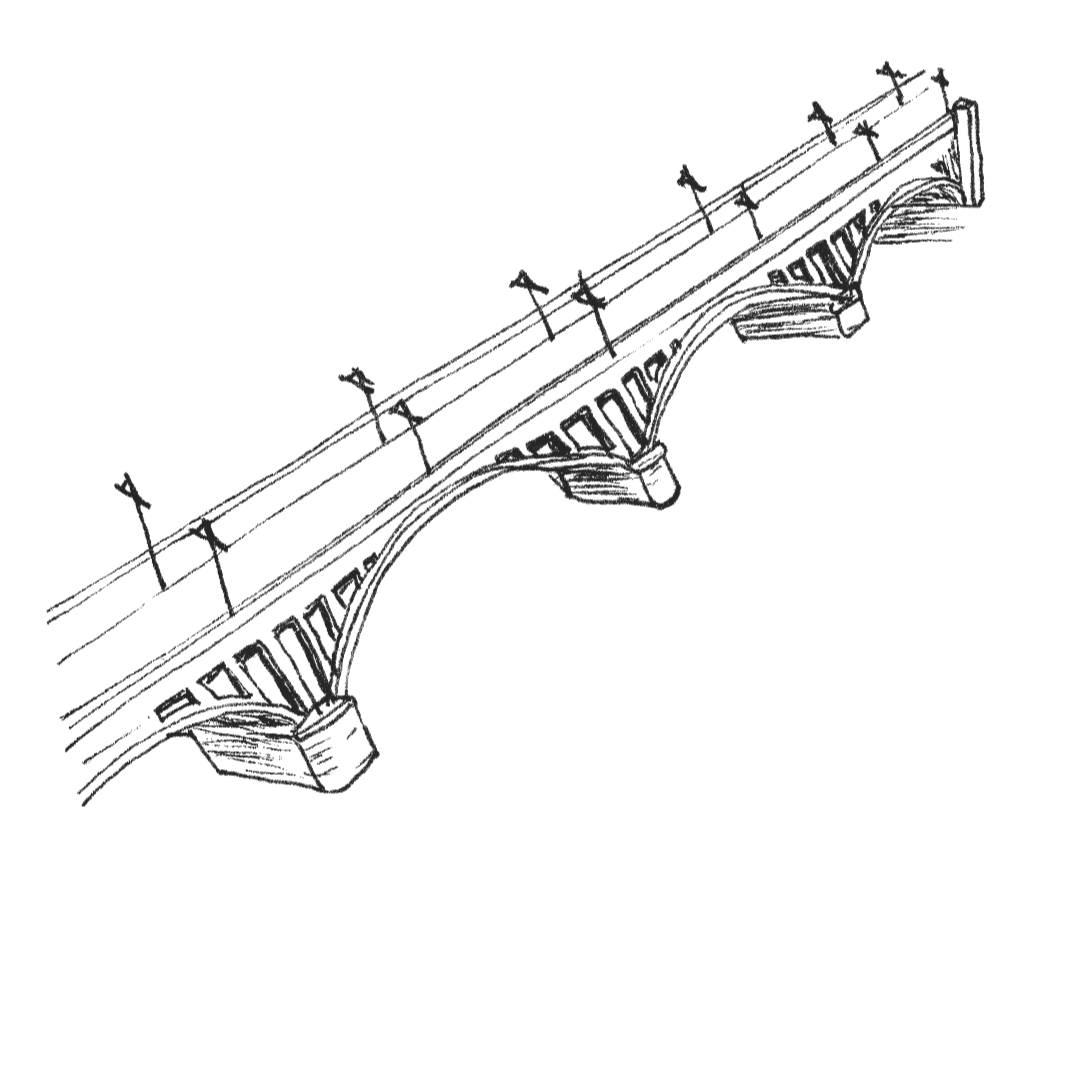
Berwick Old Bridge - The Tale of Tweedmouth Muir
Click below to listen to audio commentary (audio narration by Jane Houston Green)
The 1680s were a dangerous time and Sir John Cochrane was in jail in Edinburgh Castle where he awaited the warrant for his death for his part in the Argyle Rising, an unsuccessful rebellion against James II. However, his daughter Grizel was determined to save him. She came to Berwick and disguised herself as a highwayman, not once but twice, to intercept the Royal Mail on Tweedmouth Moor (or ‘Muir’) and steal the written order for her father’s death. She succeeded in delaying his hanging for long enough for a large bribe to secure a pardon for him.
She went into legend as the heroine of the ballad — “Cochrane’s Bonny Grizzy” — who “dressed herself in laddies claiths”. She lived till 1745 and a rather fine memorial to her can still be seen in Legerwood Church near Lauder.
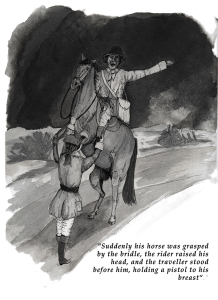
The above illustration ‘Halt’ was created by Ali Edwards as part of a series of original pen and ink pieces inspired by some of Wilson’s Berwick-based Tales for a project funded by Create Berwick.
"The Tweed" a poem - On the Banks of the Tweed
Click below to listen to audio commentary (audio narration by Andrew Ayre)
Wilson was a poet and lecturer on poetry who published a book of his own work and a summary of his views on the subject called The Enthusiast. One of his poems — On the banks of the Tweed — was not discovered until 1965; it seems to be more a lament to his lost teenage love than an ode to the river itself.
On thy banks, classic Tweed, still my fancy shall wander,
Though far from the Land of the Thistle and thee,
To follow thy course to its latest meander,
The place of my birth where thou meetest the sea.
‘Though the memory of those early friendships did cherish,
Will fade and is fading, thou still art the same,
For though dear to remembrance young feelings must perish
And the friends of our youth will exist but in name.
But there is a language in thee, sweeping river,
A voice in the woodlands that shadow thy braes,
A home and a heart by thy side that shall ever
Be one with existence, be dear to my eyes.
‘Midst the daydream of boyhood, ere glowing ambition
Had sung the fond thrilling of beauty and love,
Thy banks were my study – my only tuition
The sounds of thy waters, the coo of thy dove.
Stream of maturity, can I forget thee
When my birthplace’s threshold thy waters will lap?
Forget thee! When Nature’s omnipotent set thee
To wash the green sod by my forefather’s grave?
Yet if these were forgot thou art witness with heaven
Of my vow on the breath of thy murmurs conveyed,
When, pure as the fountain, confiding was given
To me the fond heart of my Favourite Maid.
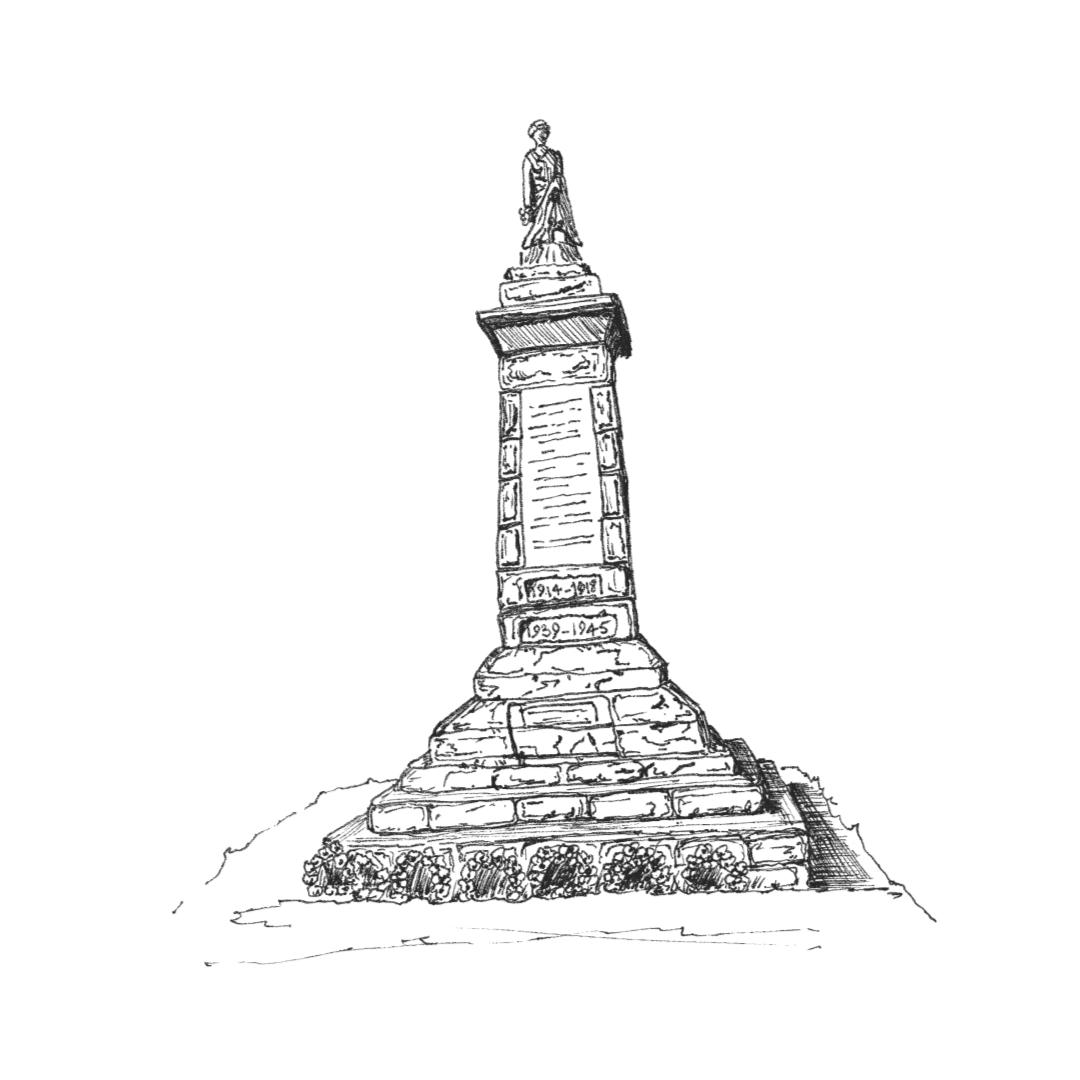
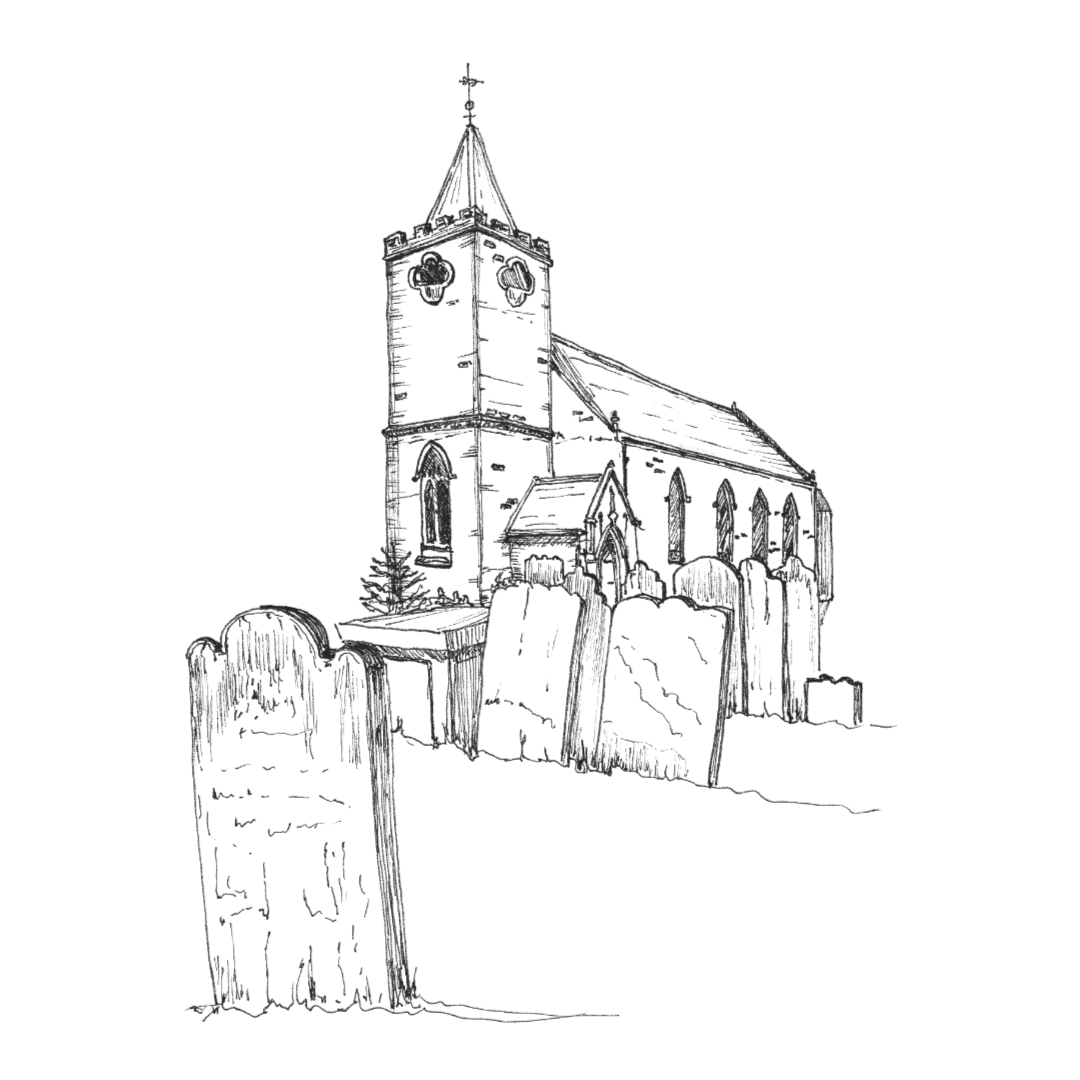
Tweedmouth Parish Church - Wilson's final resting place
Click below to listen to audio commentary (audio narration by Andrew Ayre)
Wilson originally intended to publish 96 editions of his tales. Unfortunately he died long before he got there. The last three editions seem to be a serialisation of a novel, suggesting a period of illness.
His death was announced in issue 49 with a plea to the public to continue buying the tales to support his widow.
He was buried in the churchyard of the Church of St Bartholomew and St Boisil, although possibly not where his monument now stands - it was likely moved when a new entrance was created.
After Wilson’s death, publishing of the Tales was taken over by Edinburgh Printers, who appointed Alexander Leighton as Editor. Writers from all over Scotland (and beyond) contributed to what became 312 editions of the Tales. The quality varied with so many authors but the scope of the tales became much wider. There were many reprints, 40 so far discovered, right up until 1947. We know of American, Australian, Canadian editions and even some translated into German.
They were often given to emigrating families and were still being given as school prizes and long-service awards in the early 20th Century.
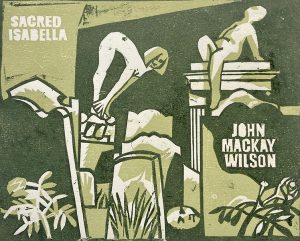
Wilson and Sacred Isabella (Morag Eaton)
The above print, ‘Wilson and Sacred Isabella’, was created by local artist Morag Eaton, inspired by the juxtaposition of Wilson's gravestone with that of one erected for Isabella. See if you can find both gravestones in the churchyard.
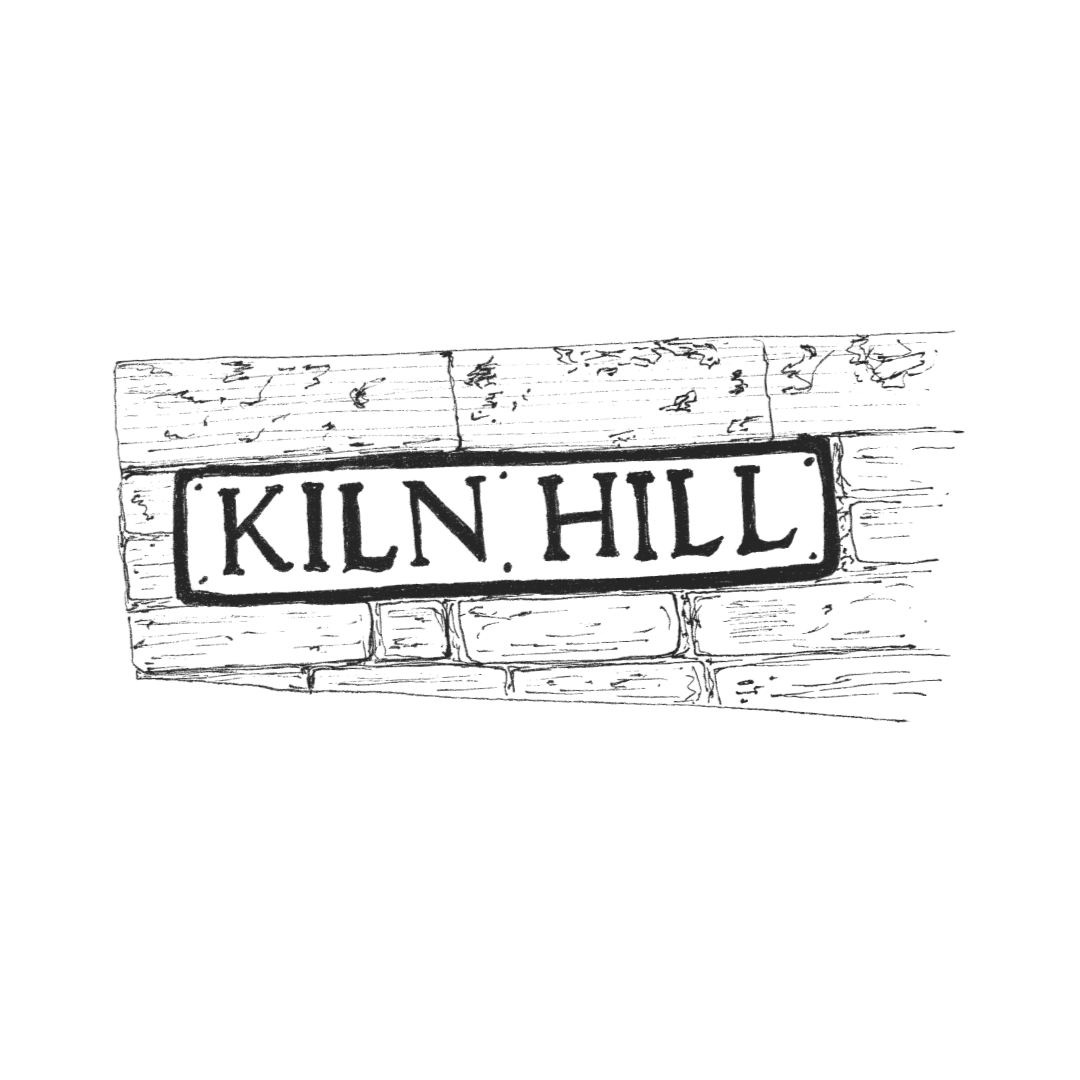
Kiln Hill - Wilson's home
Click below to listen to audio commentary (audio narration by Andrew Ayre)
Where did he live and what brought him back?
Wilson went to London as a young man to seek his fortune but ended up sleeping rough on the streets for a while before moving to Edinburgh and working as a lawyer’s clerk. From here he went to Manchester as a travelling lecturer and orator on subjects as diverse as poetry and the Temperance Movement.
He was asked to come back to Berwick to edit the Berwick Advertiser and found “powerful magnets drew him North”, leading him to accept the position although he had to walk all the way as he could not afford the coach fare! He also turned down the chance to edit The Manchester Guardian (later to become today’s Guardian), as he had already accepted the position in Berwick.
The Berwick Advertiser of 1927 tells us that he lived at the top of Kiln Hill in Tweedmouth and that his house was demolished to improve the access road to the new bridge over the Tweed.
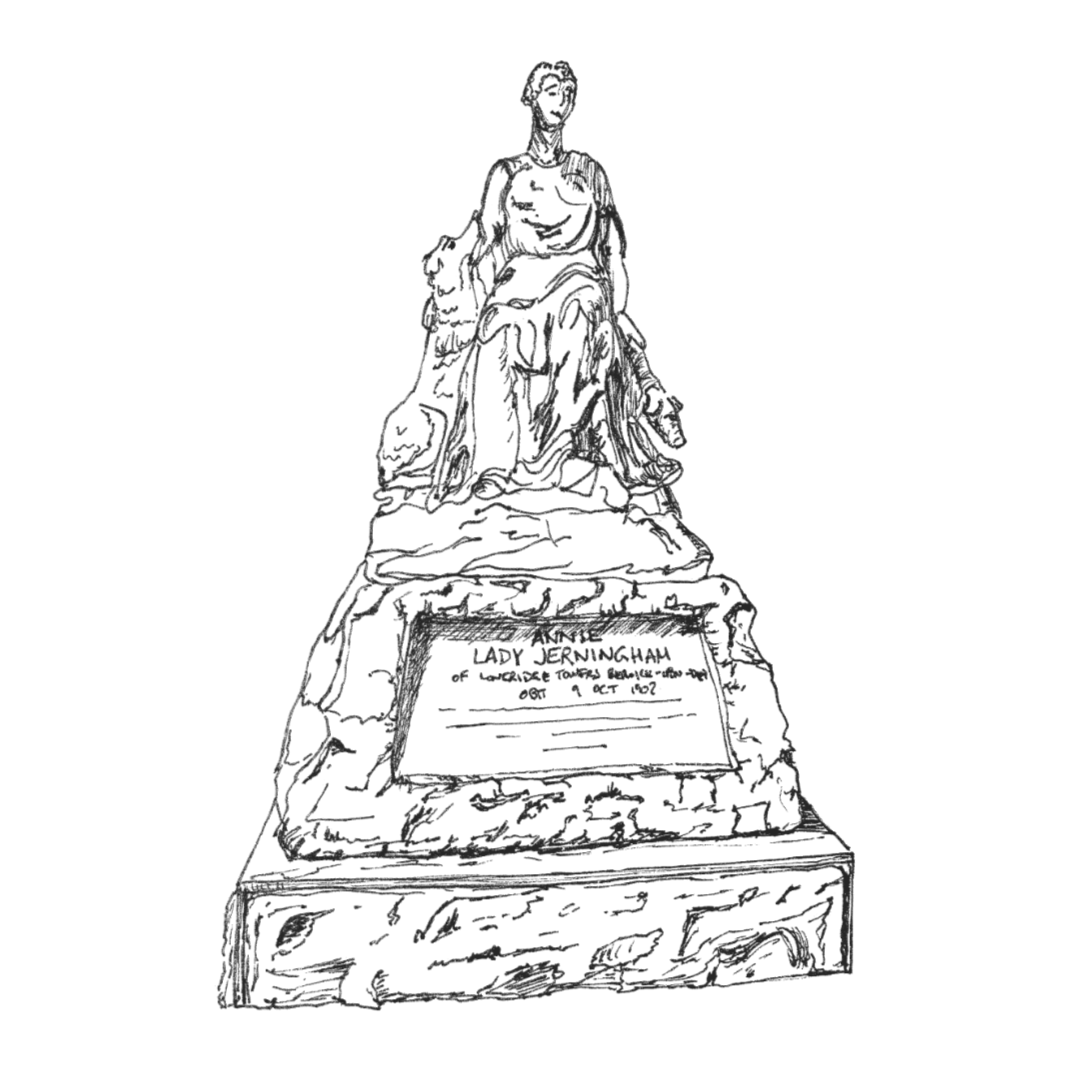
Lady Jerningham Statue - The Siege - A Dramatic Tale
Click below to listen to audio commentary (audio narration by Kevin Archer)
Wilson wrote several plays, although the only surviving one concerns itself with the four-month siege of Berwick-upon-Tweed by Edward III in 1333.
Sir Alexander Seton was Governor of the town, which was in Scottish hands at the time. The siege was brutal, with the rotting carcasses of animals catapulted into the town to spread disease. The siege began in April and by June much of the town was in ruins. Berwick's Governor, Alexander Seton, agreed a temporary truce with King Edward. It was agreed that the town would surrender if they had not been relieved by the end of July and one of Seton’s sons was given up as hostage. It didn’t end well for the Scots or the Setons. The Scottish army was heavily defeated at Halidon Hill; they became bogged down in the marshy land below the English forces, making them easy targets for their archers. Seton then witnessed his hostaged son hanged at Hang-a- dyke-Neuk, possibly on the Tweedmouth bank of the River Tweed, opposite Berwick Castle. Another of Seton’s sons was killed repulsing an English seaborn assault across the Tweed.
Edward Jerningham, of Longridge Towers, wrote a four-act tragedy entitled 'The Siege of Berwick' in 1793. It tells a slightly different tale but is a possible source of inspiration for Wilson’s version.
The site of the Battle of Halidon Hill is now farmland but it can be visited by heading along Grand Loaning lane which runs across the centre of the battlefield and via a circular conservation walk which goes around Halidon Hill taking in the English positions.
The Scots Gate - Hume and the governor of Berwick
Click below to listen to audio commentary (audio narration by Kevin Archer)
Isabel, the Mayor’s daughter, preferred the advances of a dashing young Scot, Patrick Hume, to those of the pompous and somewhat older Governor of Berwick. Her father kept a strict eye on her, making liaisons difficult for the young lovers and they decided to elope. Hume circulated word he was going to demolish the controversial New Mills dam on the Whiteadder so that salmon could once more swim freely upstream. The Governor raised the Militia and set out to defend the dam but as soon as the troops left the town Hume entered and absconded with a willing Isabel.
Later intercepted by the Governor and his men, Hume offered to return Isabel if they could take her by force of arms or if she said that she was willing to return. Reluctant to have men fighting over her, Isabel challenged the Governor to fight Hume alone if he was so keen to marry her. At which point, the Governor departed from the scene in undignified manner, on the back of a horse “as thin as he was fat”. The Mayor, seeing the Governor’s cowardice and the wit and bravery of Hume, allowed Patrick and Isabel to marry.
How true is this Tale? It is recorded that on 10th May 1683, the tenant of New Mills reported to the Governor of Berwick that Lord Hume planned to demolish the dam and a party of some 300 men went out to defend it. Perhaps there was a romantic tale behind this, after all?
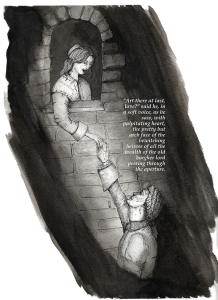
Lovers Loophole, from Hume and the governor of Berwick (Ali Edwards)
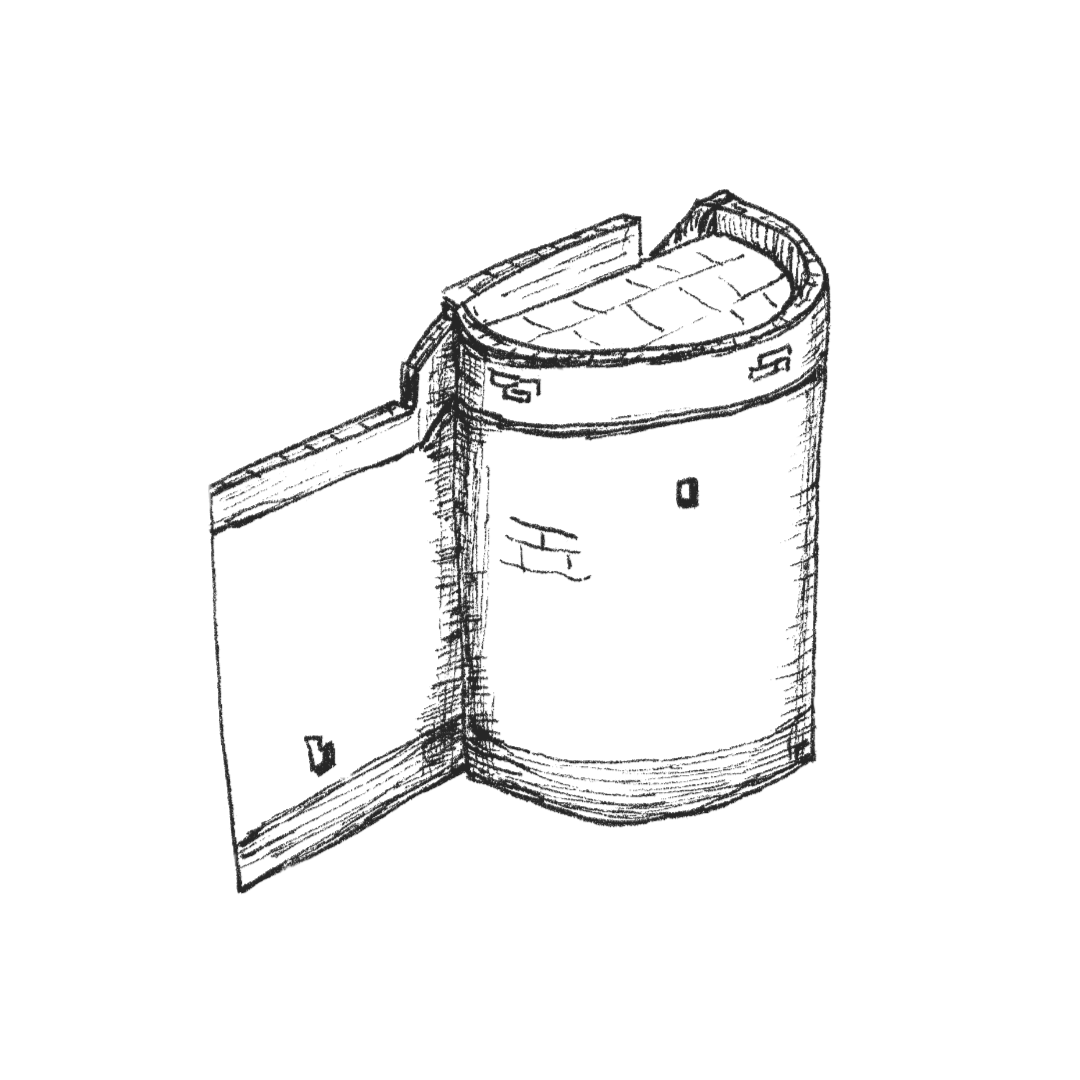
The above illustration, ‘Lovers’ Loophole’’, was created by Ali Edwards as part of a series of original pen and ink pieces inspired by some of Wilson’s Berwick-based Tales for a project funded by Create Berwick.
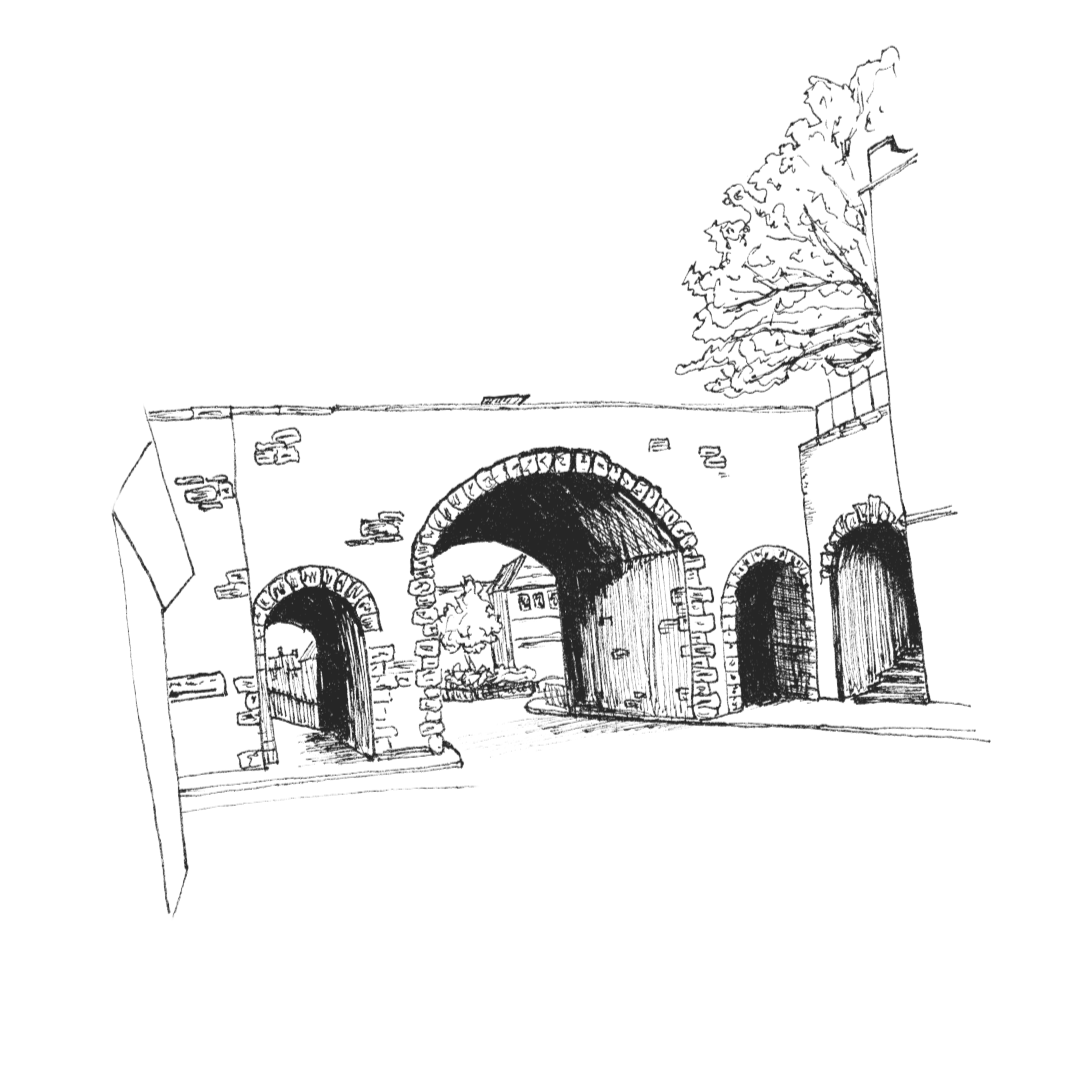
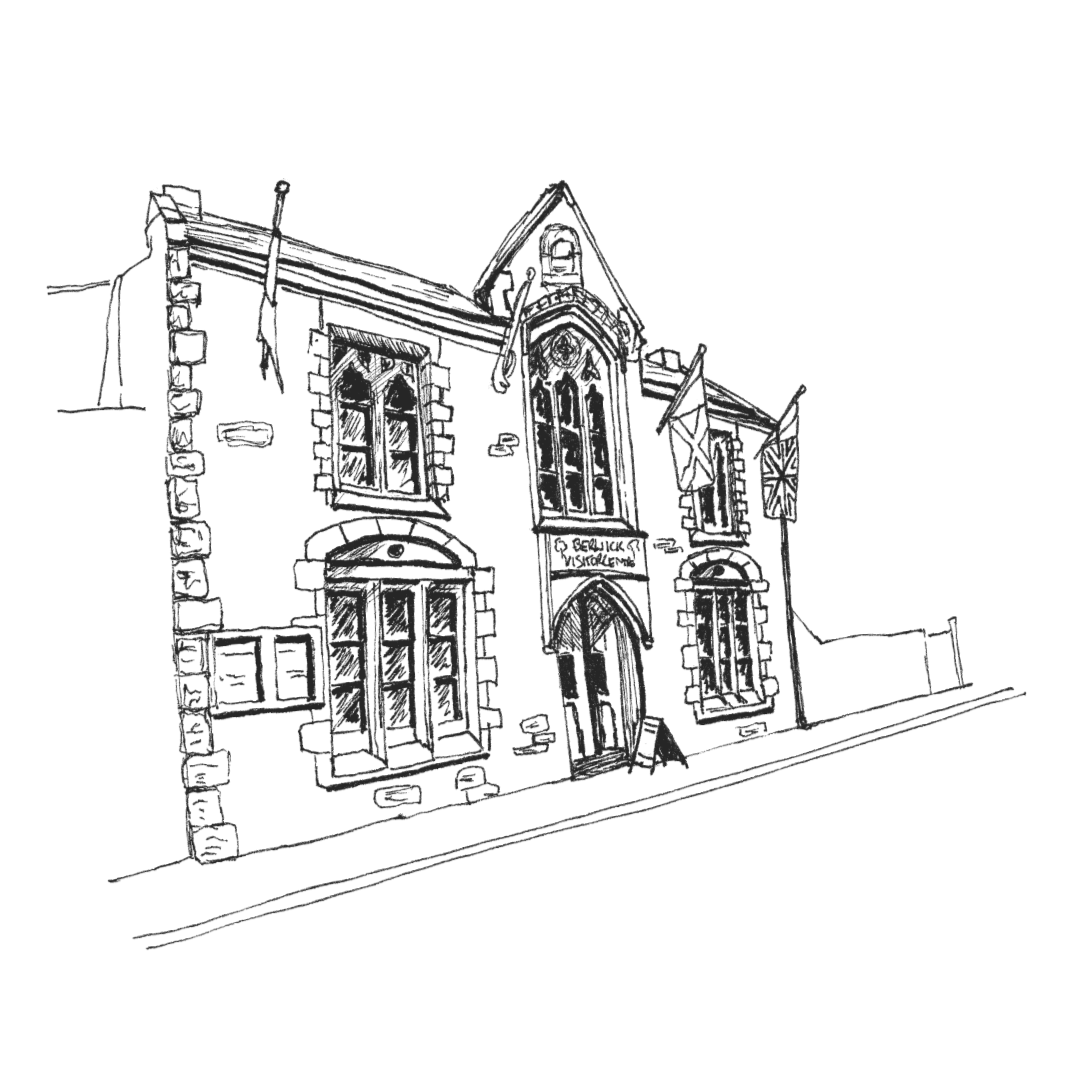
The Berwick Visitor Centre - End point
Click below to listen to audio commentary (audio narration by Andrew Ayre)
An exhibition of some of the editions of Wilson’s Tales and other memorabilia associated with him and the Project can be seen at the Visitor Centre.
If you want to read more Tales or find about more about the ones told on this walk, copies of the revival editions published by The Wilson’s Tales Project are for sale at the Visitor Centre, as well as other Berwick and Border bookshops and from the Project’s website.
The Wilson’s Tales Project was launched in 2013 to revive interest in Wilson and The Tales of the Borders and give people a chance to engage with them and retell them in new ways. An early example of this was local artist, Morag Eaton, with her image of Wilson and Sacred Isabella (see 7. Tweedmouth Parish Church), inspired by the juxtaposition of their gravestones.
For news about the Project, events and activities, visit the website, follow us on Facebook or subscribe to our newsletter.
The trail is self-guided and free to use. If you enjoy it, please spread the word and consider making a small donation to us by clicking the link below:
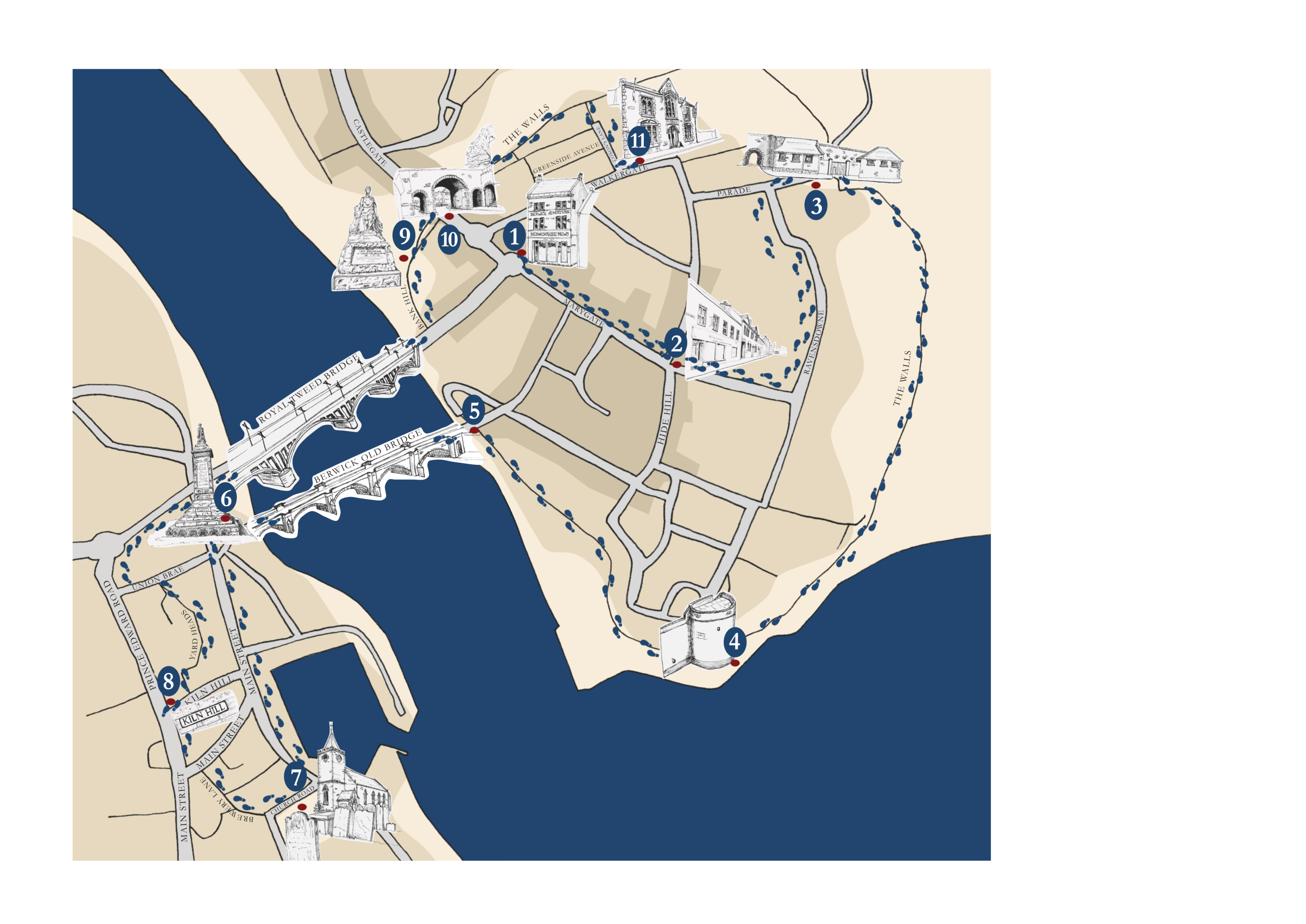
Berwick Advertiser
WoolmarketWoolmarket
The Straw YardThe Straw Yard
Coxon's TowerCoxon's Tower
Berwick Old BridgeBerwick Old Bridge
Tweedmouth War MemorialTweedmouth War Memorial
Tweedmouth Parish ChurchTweedmouth Parish Church
Kiln HillKiln Hill
Lady Jerningham StatueLady Jerningham Statue
ScotsgateScotsgate
Visitor CentreThe Visitors Centre
Artwork and trail design developed by Ali Edwards of Coostie Illustration & Design with support from Create Berwick